Showing posts with label Jeff Holland Fishing. Show all posts

Wednesday, January 11, 2023

Learning Your Aquatic Plants to Catch More Fish

The world of aquatic plants is vast and diverse.  They live under the water, on top of the water, and grow out of the water.  Aquatic plants make good habitat for a wide variety of critters: larval insects, fish, amphibians, birds, and small mammals.  


A good way to start is to learn the common plants in the lake you fish or recreate in the most. The plants that grow out of the water are easiest to identify. Smartphone applications like my favorite "PictureThis" will give you the general class of plants and often gets the species correct just by the leaf characteristics.  If you can find a flower blooming on any plant, the PictureThis app is really accurate at giving you the species names. 

Underwater plants are a little more tricky in identifying with an app. When you pick up aquatic plants that live underwater they often fall limp and don't photograph well enough for computer app identification.  These are the plants you will need to learn by hand using my upcoming guides.  Once you know the species, there are some tricks I will share on how to catch more fish out of them.  

Look for future episodes coming soon.   

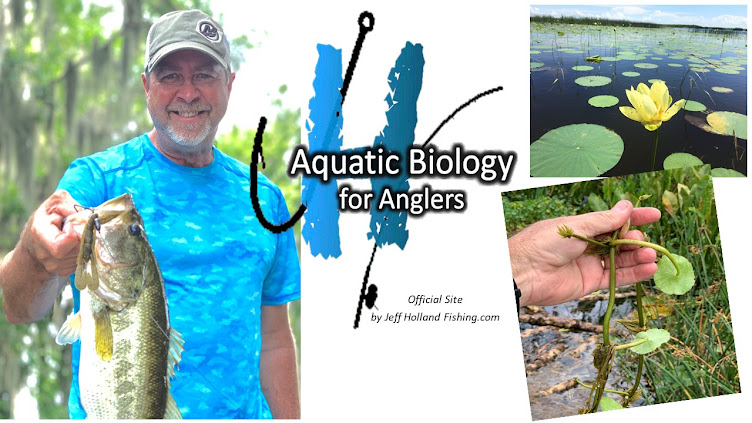
AquaticBiologyforAnglers.com


Monday, February 25, 2019

Anglers Rarely Tell the Whole Story

Every seasoned angler knows the truth of how they caught their fish, but most hold back a key ingredient in their tales of success.

With GoPro and LIVE tournament videos, the “secrets” are now visible to the angler’s trained eye. 
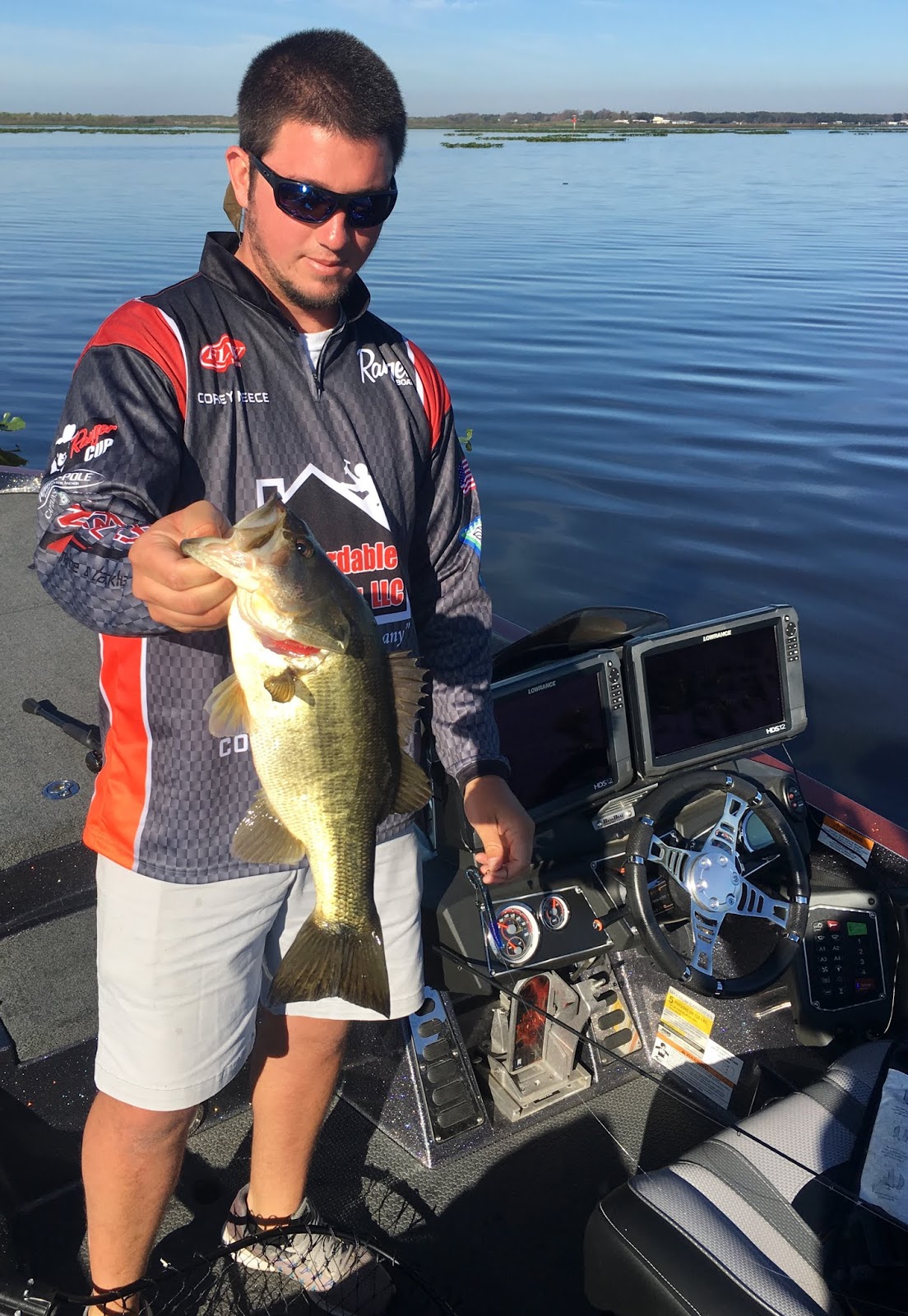
 Recently, I was able to join the FLW Marshal program near my home on the Kissimmee Chain of Lakes. I rode with Collegiate Champion Corey Neece on day one. 

Collegiate Pro Corey Neece


My second day angler was FLW Tour Pro David Dudley. David is a seasoned pro who weighed in a 21 pound, 5-bass limit on day one. As his Marshal, I was prepared to gain exclusive knowledge that no one else would know about. I must admit, David Dudley surprised me when he talked directly to his GoPro YouTube followers and explained the “key ingredient” to catching his first bass of the day-two morning. Little did I know, David shares all his practice and tournaments on his YouTube channel. I highly recommend you subscribe to his channel: David Dudley Outdoors Day1 Video
 
FLW Pro David Dudley
Casting a sinko around in the Kissimmee grass is nothing new to bass anglers, but the “secret” was in his observation and reason for making that rewarding cast. He noticed a single stalk of grass that moved and indicated a fish probably chasing baitfish. He shared his entire thought process on his YouTube summary! Check it out: David Dudley Outdoors Day2

Most of the time fishing success doesn’t come exclusively from the bait used, but more importantly, from the reason it was used or how. For example, David cast his sinko into pad clumps on Kissimmee Chain of Lakes during the FLW Tour event. Something I’ve done many times in my own fishing career. However, due to lack of wind he held the rod high, and used the sag in his line to painstakingly pull the bait slowly through the pads. Something I have never done.
Next time you watch a live tournament event, be sure to look for those “secrets” that anglers rarely share but are visible on video.


Be sure to subscribe to David's Instagram @DavidDudleyFish for up to date "how to" postings.

Want to know about aquatic plants or lake conditions on Kissimmee or Okeechobee? Go over to my website and hit the tab
"Jeff Holland Fishing - Plant and Lake Info”.

Remember, plants are habitat, no matter if they are newly growing or under a plant control program. The hydrilla and pad field where David Dudley caught his 21 pound bag on day one was on a shallow flat of hydrilla that had been treated and was sparse and dying.

Hope you enjoy this short video on the Marshal experience.
Video Short: Marshal experience on Lake Toho 


Thanks for checking out my blog.
Jeff Holland
“Aquatic Biology for Anglers”

Sunday, March 25, 2018

Numbers Can Be Misleading

My angler status and associated ranking does not fully reflect the story of my first year’s experience on the FLW Costa Southeastern Tour.  
Over two hundred anglers routinely fish in the FLW Costa Tour 

Yes, my ranking of 100th out of 268 is accurate, my weights were all properly recorded, but my numbers miss represent my 2018 story. 

In January, wind dominated southern Florida. The first event on Lake Okeechobee was very tragic. A pro boater’s judgement error and high winds played a key role in the death of fellow coangler Nik Kayler on day one. 
Remembering Nik Kayler - 2018

The tragedy caused the cancellation of the remaining tournament and only day-one weights counted.  A poor day of fishing showed in my pplace standing and a total weight of five pounds, two ounces. I was not on any solid fishing pattern so this finish was justified. 

Second stop of the Costa event was on Lake Seminole the first week of March.  Again, wind destroyed the lake the first day of the event and a lake wind advisory caused the cancellation of tournament day-one. 
A massive wind storm cancelled day-one

The full field was required to fish the next two days to determine the champion. 

In practice, despite the cloudy, windy days I found three solid fishing patterns that should have put me in contention for a top ten finish. 
Wind and weather had to be factored into the game plan

The fishing patterns were:  open water schoolers around isolated plant beds, prespawn bass in lilypads, and staging bass on 20-foot deep timber. 


Aquatic plants found to hold schooling bass

Lilypad beds where prespawn bass were holding

Deep water standing timber holding staging bass
The storm that passed the night of day-one wrecked my open water schoolers. I was only able to entice one bass in the three-pound class to bite my lure, but lost it at the boat. 

I also lost some numerous bass in the three-pound class fishing topwater frogs in the lilypads, and lost another four-pounder fishing jerkbaits in standing timber. 


In the end, my two day weight of 18lbs, 3ozs for eight bass gave me a finish mid-pack in the 238-angler field. 

Being in the bag line is a good thing
A large crowd gathered to see our fish


If I had landed any of the three-pound bass that I lost, I would have filled my allowable five-bass limit and I would have finished in the top 50 with a nice paycheck.  

In this last derby I played the weather correctly, developed a nice diversity of patterns to hold up for three days, and caught more weight in each consecutive tournament day. But bad execution cost me. I have relived every lost fish too many times to tell you, but I have also analyzed the cause of each loss and vow to correct the problems. 
Aquatic plants that grew underwater and chocked out spawning areas

A hard line where shorelines dropped steeply into the water

The “numbers” do not tell the whole story of how close I was to having a top finish!  

Remember, there is always a great story behind the scenes of how close each angler was to taking the prize, so do not take the numbers at face value. 
My best two bass landed on the final day of Lake Seminole event

Tight lines, and remember to learn your aquatic plants to catch more fish.    
Jeff 

Monday, November 28, 2016

A New Psyche to Fishing

After four years on the Bassmaster Southern Open bass tournament circuit I learned first-hand how important it was for anglers to fish instinctively. Balancing a family life, career, and competitive fishing life takes constant work. With all the family events, work duties, tournament travel miles, sponsor obligations, charity work, and social media production, there is little time left to spend on the water before each tournament. 

For me, fishing patterns found in practice are over rated. In nearly every major tournament event I have participated in, the fishing pressure and weather encountered during the tournament week cancelled out any fishing patterns I developed in practice anyway. So why should I stress about practice?  I always found myself developing new fishing patterns each tournament day anyhow.  

To prove my point, my highest finish over my four-years on Bassmaster Southern Open Tour was on Douglas Lake, TN in April 2013. This was a reservoir I had never fished or seen before. It was a deep reservoir that fluctuated 40 feet annually. I drove up on Saturday and managed three days for practice before the Thursday start. I found cold water temperatures and lethargic bass, a massive shad die-off, and extremely cold weather. My Florida-style of fishing only landed me one keeper bass in three anxiety-filled days of practice. I felt horrible about my chances, but I never felt out if the game. 

In that tournament I was forced to find bass in the coldest, muddiest water (47F) I had ever fished. I successfully developed a technique and lure combination using a bait I never used before, a jig. Knowing that northern anglers rely on jigs in the wintertime, I tied one on in the cold rain and slowly worked steep rock bluffs down to 45 feet deep. I was rewarded with two days of solid limits of bass and a 22nd place finish out of 182 pro anglers!  The pros I beat that day were Bassmaster Classic Champions and Elite pro's: Casey Ashley, Randy Howell, and Paul Elias, Aaron Martens, Gerald Swindle, Brandon Palaniuk, and Kieth Poche! 


https://www.bassmaster.com/results/tournaments/2013-bass-pro-shops-southern-open-2/1


I didn't realize it at the time, but that was my first major success fishing instinctively and with an open mind! 


In 2016, I decided to take the year to work on my mental fishing game and market my sponsors to a more local, yet large grassroots audience. The long-term value to developing my instinctive style of fishing will pay off in the future. The pure fishing philosophies showcased by Major League Fishing Selects and Bassmaster Elite Bracket events are the wave of the future. 


I now find greater focus in my practice  for getting a sense of where to find good bass habitat and clean water quality. The habitat conditions always revolve around finding aquatic plant communities that bass would likely use. 


My scouting days on a lake or river now utilize the power of my Lowrance HDS9-Touch Gen3 unit to help understand lake conditions and fish movements.  The technology has advanced so well it easily helps me find bass and bait-fish in the areas I intend to fish. 

The other factor in my scouting has been to follow the teachings of Bassmaster Elite professional Rick Clunn in how I scout for bass. His theories covered all seasons (winter, spring, summer and fall) as bass are fairly predictable in their seasonal life cycles.  Click here to read the UltimaterBass.com copy of Rick Clunn's theories.


How deep I fish each season is closely based on Buck Perry's structure fishing theories: 1) the home of the fish is located in deep water, and 2) 90% of the big bass are in 10% of the water.  


Hooking Bass In Practice
Another way my new approach helps me is in the fact that I don't hook a lot of my fish in practice. Most of my tournaments occur on Saturdays on lakes that get fished heavily by a lot of anglers. These highly-pressured bass are already weary of anglers, so why would I hook bass and make them wise to my lures in practice? I have done that before, and while I may have "won in practice", the results rarely transferred over into my tournaments. The goal is for me win on tournament day, not in practice. 

My tournament competitors are typically younger pro anglers, local guides, and a variety of anglers with tremendous time on their hands. They normally have an advantage during stable conditions due to their vast time on the water. If any aspect of the weather, wind, or current changes, those anglers are commonly lost for a few hours. I feel my "open-minded" approach helps me evaluate the bass quicker and gives ME the advantage. 

My approach is nothing new, just look at the similar challenges the bass pros are faced with in Major League Fishing. Their rules force them to fish unknown waters with no practice or previous research!  Check out the show here if you've never seen it. 
Full-time Elite anglers always seem to know what the fish are doing and how to catch them.  Not the case with me: I may know about aquatic plants, have a good understanding of lake biology, but bass behavior still eludes my full comprehension. I still have those days where I get beat in tournaments and leave the water not sure where I went wrong. But those days are fewer, and my quest for a free-style fishing approach has raised my confidence level higher than I ever dreamed possible. 


My free-style approach is a mental wreck - get through the smoke and may be in the lead
However, I warn other anglers that this journey is only for hard-core fish heads. It will totally mess up your psyche and play more mind games than you ever imagined in a tournament!  


The journey will be similar to a multi-car wreck in a NASCAR race, once you drive through the smoke of the mental wreck, you may just come out as the lead car! 


In this and future blogs, I will continue share my journey for mastering the technique of "instinctive fishing" that leads more to "fishing in the moment".


Please stay with me on this journey!  Jeff

Sunday, July 28, 2013

New Boat Wrap

The new Triton/Mercury/AERF /Power-Pole boat wrap has been installed by Wrap This Ink.

Thanks to Jason and Damon for their designs.  Their team did a fantastic job, as usual.  The 3M products they utilize held fast on my last boat wrap that I ran for over two years.  I know this new wrap will last beyond other brands.  Thanks guys.

 
During the break in the Bassmaster Southern Open tour,  I have been enjoying saltwater wade fishing and bass fishing on the Upper St. Johns River, Seminole County, FL. The Florida Fish and Wildlife Conservation Commission has really done an excellent job of planting bulrush and eelgrass beds. I my opinion some of the best habitat for our Florida largemouth bass and sunfish.

Toyota Bonus Bucks

My Triton/Mercury/Power-pole ride

Fishing on the St. Johns River, FL

Flipping Giant Bulrush vegetation with BPS Extreme 7'10" rod

Attendance at the 3rd annual "Bowl for the Troops" was a lot of fun and raised over $3,000.  All the money will be put toward monthly packaging for the troops supported by Kids in Support of Soldiers.  Tim from Wooden Cross Productions was there putting the finishing touch on a video he is producing about the K.I.S.S. Foundation.   I will post the link as soon as he airs it.


Front of bowling shirt showing Marine Ryan Harrison and others

Back of shirts showing JHF and AERF sponsors
Casselberry Lanes was the site of the 3rd Annual "Bowl for the Troops" event.

Lastly, many friends and family ask me about fishing techniques, how-to, and "what to do when.." scenarios so I began pulling together some video clips to share what other anglers better than me have taught me.
Fishing technique videos coming soon, redfish on!
I know you will enjoy them. Look for the videos to begin airing on my YouTube channel in August, 2013.  I will post links here on the blog.

Jeff Holland

Saturday, June 8, 2013

Southern Open on Coosa River


The third Bassmaster Southern Open tournament of 2013 was held on Alabama's Logan Martin in Pell City. It was a another amazing event with water levels constantly changing.  Wow, were Coosa River spotted bass fun to catch!
Photo by BASS: James Overstreet
I missed several opportunities to do better during this event and it cost me with a 120th place finish.  Despite the poor showing, I still had the best season of my career. While not satisfied with my performance this year, I will accept the fact that 2013 was the pinnacle of my professional bass fishing career.  

Here is how Logan Martin fished:
Heavy rains during the weeks leading up to the tournament brought the water up six-feet above full pool. My initial campground was under water when I arrived on Sunday for my first day of practice so I had to scrabble and find another campground. I've learned to keep a list of all the local campgrounds and hotels for just such an emergency.  
With the high water brought muddy conditions and lots of floating debris.  The bass were trying to spawn in the 68F degree water temperatures and spawning beds were common in the shallow, backwater areas.  Largemouth bass were easily located in water two feet deep along the shorelines of coves using topwater, spinnerbaits, and soft plastic creature baits.


Aquatic vegetation grew along the shorelines and submersed plants grew in the quite coves of several creeks. Still, largemouth bass over four pounds proved to be elusive and not feeding well.

Spotted bass were doing what they do, schooling along main points of the Coosa River and in coves.  Topwater, jerkbaits, and crankbaits got plenty of bites during practice from one pound spots.
Coosa River spotted bass (Micropterus punctulatus)

Typical schools of bass fry in the shallow water creeks
By Wednesday I had two areas that held good bass, Rabbit Cove and Clearwater Creek.  They were a fifteen minute run from the launch site so I needed an early boat draw to allow me to reach my fish before the other anglers. As luck would have it, my boat number for day one was 38.

My practice weather had sunny and light winds so on tournament day it was, obviously, it was overcast.  The water management agency had lowered the lake about one foot overnight in anticipation for rain. I was able to overcome the weather change but the lower water started re-positioning the shad.  The spotted bass were roaming more over deep water (40ft) and not bunched as much up on points.  I found a good cadence for my jerkbait that caught several spots, just no big ones.  With no keepers in my livewell by mid-morning, I made a move to fish for shallow-water largemouth bass.

I motored to my best creek and quickly caught three keepers on a speed worm.  Water that was once three feet deep in practice was now only two feet deep.  While the overcast conditions kept the bass shallow, the fish instinctively knew to swim to deeper water to avoid being left stranded on dry ground. In addition, a local angler was enjoying a day of bass fishing and was doing a real good job of catching all the bass I located. So much for un-pressured fish...but wait...I saw a bass chasing bait shallow.  I threw a soft plastic fluke to the where the bait fish were jumping and a good bass eats the lure in one foot of water.  I set the hook but the plastic balled up on the hook and prevented me from getting a good hook set.  I quickly picked up my xrap hard jerkbait with three treble hooks and work the area.  Just when I was about to lift the lure out of the water for another cast, a largemouth bass about four pounds hits my lure.  I immediately noticed it hit the last hook, and just barely at that. I gently tried to play the fish but the skin-hooked bass easily surged and got away. Ouch, I knew that was going to cost me in this event.

By noon I had enough of the shallow water and decided to spend the rest of the day in deep water trying to catch the three pound spotted bass I had found in practice.  The first pass on my main point in Rabbit Cove produced two nice keeper Coosa spots that gave me my limit.  While a limit felt good, I was targeting larger bass and thought of my small limit as only by-catch.

Live blog post on Bassmaster.com 
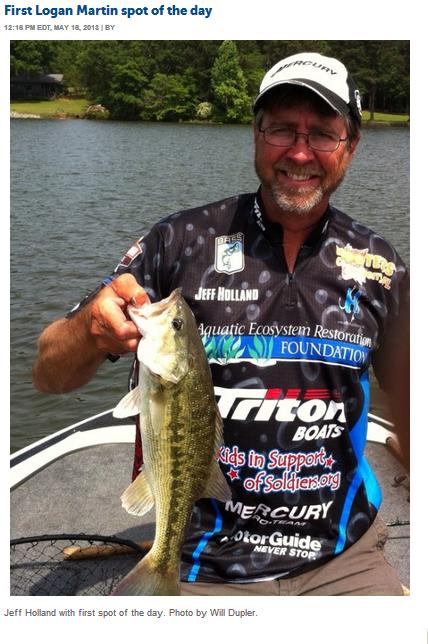
BASS was testing out a new blog during the Open events, so my co-angler snapped a picture of my first Coosa spot in the tournament for the live blog.

I culled by ounces the rest of the day and ended with a total of five bass weighing 8.4 pounds, good for 119th place (out of 164).  I was miserable.  The four-pound bass I lost would have put me in the top 50.

BASS tournament organizers flip boat numbers on the second day to make it fair to everyone.  Since I launched early on day one, I could expect to launch late on day two.  My number ended up being boat 127, in the 9th flight.  But that wasn't the bad part of the day.  The bad part was the water was down nearly two feet overnight due to heavy rains expected in the evening of day two. That was going to hurt my shallow water bite.

I ran to the deeper spotted bass points to try and get an early bite while the water was flowing.  Spotted bass were eating, and I had a small limit within the hour on my jerkbait.  Thinking I need big largemouth bass to climb up in the standings, I moved back into my shallow water creek.  The fish had left, and I didn't catch a single largemouth big enough to cull the spotted bass I had in my livewell.  Not having time to relocate the largemouth, I started fishing every point for spotted bass on the way out of the creek. I was rewarded with a nice 2.5 pound spotted bass and a few two pounders.  Still, I knew my small limit would not help.  I fished as hard as I could trying to relocate the shad and my three pound spots but I never did.

In hind sight, the items I did not fish in my cove were two marinas.  And wouldn't you know it, the eventual winner of the event, David Kilgore, found his bass feeding on shad that have moved to those marinas.  The overcast apparently put the shad in the mood to spawn, and the only thing in the cove to spawn on was the floating docks.  I learned a valuable lesson.

My second day ended with almost the exact same weight for five fish, 8.5 lbs. The 120th place I earned was the worst of my season and pulled my overall Angler-of-the-Year (AOY) ranking from 12th to 28th. When I get focused in my tournament mindset, nothing but a win is acceptable, and I was very disappointed while driving back to Florida and reflecting on my performance.  I continue to achieve my goal of improving my fishing skills, but that does not remove the sting of knowing that I could have done better.

Now that the event is over and I had time to put it into perspective, I feel proud about a 28th AOY finish in the Southern Open level of the Bassmasters tournament trail!


I learned a lot this year and beat some prominent Elite tour professionals along the way. I walked away from the Alabama event with the best fishing season of my professional career and I already look forward to starting the 2014 season.  

Thanks for following my blog and please support our troops by helping out Kids in Support of Soldiers

Jeff


Saturday, February 16, 2013

Beginning A New Tour Season 2013


The City of Kissimmee hosted the first Bassmaster Southern Open event of 2013 on Lake Tohopekaliga.  I must say it was nice to spend nights at home since the lake was in my home town only 45 minutes away. Still practice was typical for February in Florida with bass spawning and windy cold fronts hitting every few weeks to challenge the anglers. FWC plant management efforts were providing anglers miles of hydrilla edges to fish throughout the chain. 

Nearly 200 pro bass anglers visited Kissimmee Florida for practice on Monday and a shot at winning a berth to the Bassmaster Classic.  Both Monday and Tuesday practice days held nice weather, partly sunny cloud cover and a mild February breeze out of the north.  Then Mother Nature realized this was the first tournament of the year and she wanted to remind everyone who was boss. She hit the area with Gail force winds over 32mph from the South none the less.  Extremely unusual for the month of February.  Needless to say, the winds muddied up a lot of water the night before the tournament, leaving many anglers unsure of whether they had areas to fish on day 1 or not.


My name was randomly drawn as boat #31 on Day 1, flight #2 with a weigh-in time of 3:15pm.  This meant the early morning bite that I had discovered in practice had a chance to help me as it was in a wind protected area.  Luckily the area held up and produced two nice keepers in the first 45 minutes while the tournament director was still launching out the other anglers one at a time.  No more old fashion shot-gun starts like in the 80s.

The four pound bass I had found in practice had vacated the area and I probably spent too much of my morning searching for them.  As the sun peaked higher in the horizon I headed over to some shallower spawning areas and used a soft swimbait to pick up my limit by 10:30 am.  One of my personal goals of catching a five-fish limit of bass was accomplished, but I was still short of my other goal of having fish that averaged over three pounds. My research had shown that fifteen pound limits each day would give an angler a top 20 fish on Lake Toho, while an eighteen pound limit each day would make the third day’s cut of the top 12 anglers. 


Fishing the 2012 tour taught me that a small limit of bass only makes an angler feel good, it does nothing to help in the tour standings. To be successful on this tour, anglers must have larger than average bass and a big bass each day.  Knowing this I spent the afternoon chasing the ghosts of big bass I had found in practice.  Over 30% of the water I practiced on was muddied by the unusual Gail force winds. I was able to get two good bites flipping, one four pound bass I pulled to the surface of a cattail mat before it came off, and the other I lost when my braided line slipped out the eye of my flipping hook, another rare occurrence.  All the other big bass I had found under floating plant mats either scattered or were not biting.  The sport of fishing is very hard when you can’t see your targets, e.g. bass.  Imagine shooting basketball in a room with an invisible hoop that only showed up when you made a basket!  That’s bass fishing.  There could be 40 bass under a floating island and if you don’t entice them to bite a hunk of metal and plastic, things we call fishing lures, then you don’t even know they are there.   

My first day's limit of five bass weighed 9lbs 9ozs, averaging only 1.91 lbs/bass which put me in 53rd place.
 photo by James Overstreet, BASS

On day 2, I was drawn as boat #168, flight 9 with a 5:00 pm weigh-in time.  This late draw was going to prove beneficial as the bass were getting more active in the afternoons when the sun was high.  With an over night cold front dropping air temperatures down to 36 degrees F, I was going to need that sun to get my bigger bass active again.  I launched out in the morning with hopes that the cold front would improve my flipping bite again.

I started day 2 in the same early morning area as day one, got two nice keepers on a jerkbait, a dozen short bass, and then a nice three pound fish.  I flipped the mats around this area to no avail.  Next, I ran the same stretch of spawning flats in Lake Toho and finished out my limit by 11:00 am.  With a limit in hand I ran to south Toho and pitched floating hydrilla mats to cull up with another nice three pound bass.  On my next pitch I lost a good bass of nearly four pounds. I spent the next four hours pitching and flipping mats trying to catch a big bass but all I could do was upgrade my limit by ounces.   I found the big bass were no longer under my mats, but my stubbornness kept me wishing instead of fishing.   I picked up my jerkbait and starting working a little deeper water around my areas and again picked up a half dozen bass that only gained me ounces. 
    
With twenty minutes left until weigh-in, I made a cast next to some spatterdock lilypads. I ripped that jerkbait past the pads and enticed a reaction strike from a bass.  My line jumped, so I swept the rod to my right side to set the hook.  It was then that I saw the bass, a solid six pounder!  When I set the hook it turned her sideways to me and I could see she hit the jerkbait in the middle, with only one treble hook having a chance to hook her.  That chance was slim, and when she opened her mouth out came my bait.  I made many more pitches in the area knowing she never really got hooked, but I never could entice her to bite again.  I fished down the bank and nailed another solid three pound bass, culled up a few ounces, then headed to weigh-in.

My second day weight of 10lbs, 14ozs put me in 45th place overall; 10 ounces sky of making a paycheck, 5.5 lbs out of the top 20 list, and only 7.2 lbs out of the top 12 cut to fish the third day.  The lost four pound bass on day one and lost six pound bass on day two would have pushed me way up the leader board and given me the dream of fishing on the third day. 

So there you have it, my best finish, yet the worst tournament execution of my professional fishing career.  The yin and yang of fishing.  I felt good about finding the fish it took to win, just could not get them in the boat.  I can’t wait to try it all over again in April on Lake Douglas in Jefferson County, Dandridge, TN.